• Follow Us On :
GERMANY MEDICAL PG ADMISSIONS

Build Your Medical Career In Germany with World-Class PG Training

Achieve your dream of pursuing Medical PG in Germany through structured guidance, German language training, licensing support, and hospital placement assistance. Start your journey toward an internationally recognized medical career.

Start Your Medical PG Journey

Fill out the form below and our expert counsellors will contact you to discuss eligibility, language training, licensing, and the complete Medical PG pathway in Germany.

MEDICAL PG IN GERMANY

Build Your Medical Career In Germany with World-Class PG Training

Achieve your dream of pursuing Medical PG in Germany through structured guidance, German language training, licensing support, and hospital placement assistance. Start your journey toward an internationally recognized medical career.

Contact Form Demo
Medical PG in Germany

Medical PG in Germany After MBBS for Indian Students

Your Career, Your Choice.

Empower your future by pursuing your Medical Post Graduation in Germany after completing MBBS in India. Experience world-class medical training, internationally recognized qualifications, and excellent career opportunities with complete guidance throughout your journey.

Don't Let One Exam Decide Your Career

Pursue your Medical PG in Germany with internationally recognized qualifications, expert guidance, and excellent career opportunities.


SUCCESS COMES TO THOSE WHO TAKE ACTION

Get expert guidance for German Medical PG admissions, language training, licensing pathways, hospital placements, and career opportunities for international medical graduates.

Book Free Consultation

Why Medical PG in Germany is Such a Unique System?

When you decide to be a specialist in Germany as a Medic from India, you get rid of all the challenges faced by doctors in India. Pursuing your PG in Germany after MBBS in India is

  • Without any subject based competitive clinical MCQ based exams
  • Without compromising on your choice of specialization
  • Integrated pathway for super specialization and
  • Guarantee of settlement with a handsome salary even before specialization

The uniqueness of the system allows you to work in a hospital/clinic as a fully-paid doctor while pursuing a medical PG in Germany, and the specialist degree is nothing but a by-product of your employment as a doctor in Germany.

WORK – LEARN – EARN

We are a one-stop destination for medical practitioners who are looking for employment in Germany through Approbation so that they can accomplish their academic and professional dreams in Germany. We extend a helping hand through a cost effective, all-inclusive range of integrated service for doctors from all around the world, with a special focus on Medical PG in Germany Indian doctors and serving as a trusted Germany consultancy in Hyderabad, India.

We are a one-stop destination for medical practitioners who are looking for employment in Germany through Approbation so that they can accomplish their academic and professional dreams in Germany. We extend a helping hand through a cost effective, all-inclusive range of integrated service for doctors from all around the world, with a special focus on Medical PG in Germany for Indian Doctors and serving as a trusted Germany consultancy in Hyderabad, India.

Why Medical PG in Germany is Such a Unique System?

When you decide to be a specialist in Germany as a Medic from India, you get rid of all the challenges faced by doctors in India. Pursuing your PG in Germany after MBBS in India is

  • Without any subject based competitive clinical MCQ based exams
  • Without compromising on your choice of specialization
  • Integrated pathway for super specialization and
  • Guarantee of settlement with a handsome salary even before specialization

The uniqueness of the system allows you to work in a hospital/clinic as a fully-paid doctor while pursuing a medical PG in Germany, and the specialist degree is nothing but a by-product of your employment as a doctor in Germany.

Work – Learn – Earn

MissionGermany

Start Your Career Journey in Germany

Discover opportunities to study, work, and build your future in Germany with expert guidance and trusted resources.

Start your career journey in Germany
Medical Doctors
Germany Medical Pathway

Become a Licensed Doctor
in Germany

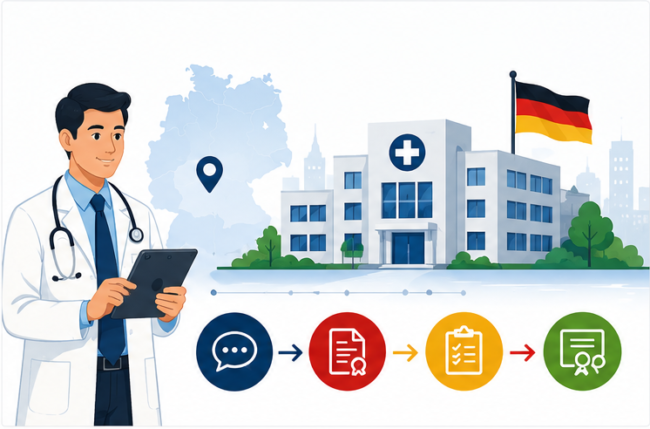
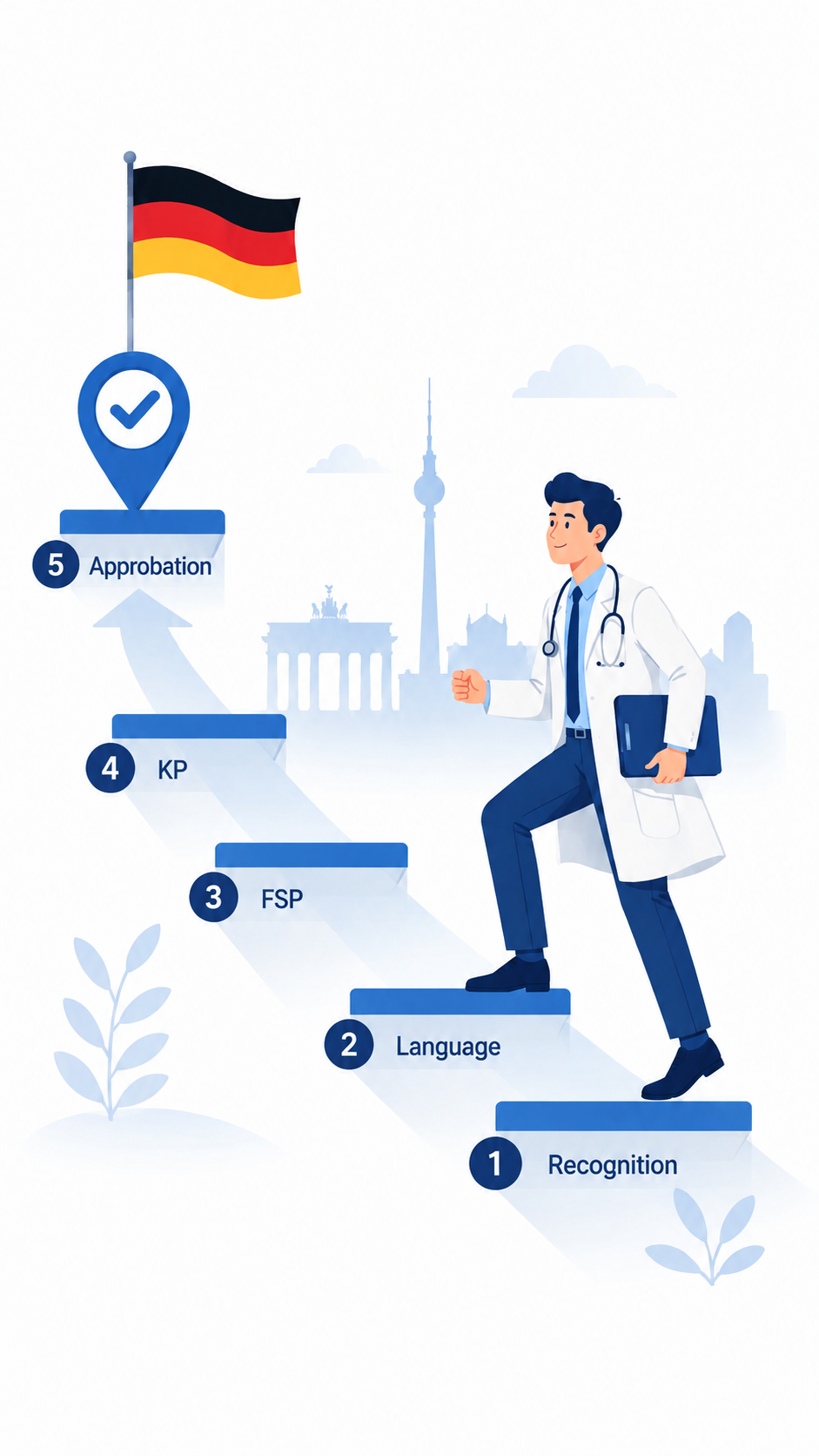
Recognition Language FSP KP Approbation
Medical Recognition Process

Is Your Indian (Non-EU) Medical Degree Valid in Germany?

A non-EU medical degree, including an Indian MBBS, is not automatically valid in Germany, but it can be recognised. The authority compares your training to the German curriculum; if it is equivalent, you proceed directly, and if not, you take the Kenntnisprüfung (KP) to prove equivalent knowledge. In both cases you also need German language proof and the Fachsprachprüfung before the Approbation is granted.

Recognition of Degree

Recognition of an MBBS degree in Germany means that the German medical licensing authority evaluates your medical qualification to determine whether it is equivalent to a German medical degree. This process is called Anerkennung (recognition). It is a mandatory step before you can obtain a German medical license (Approbation) and work as a doctor in Germany. An Indian MBBS is not automatically recognized as equivalent in Germany. Most Indian graduates go through the recognition process and may need to pass the Kenntnisprüfung before receiving full Approbation, depending on the evaluation by the state authority.

German Language
German Language

The exact language requirements can vary slightly by Bundesland (German state), but B2 General German + C1 Medical German (FSP) is the standard pathway across Germany.

Fachsprachprüfung (FSP)

Fachsprachprüfung (FSP) is the Medical Language Examination required for foreign-trained doctors who want to obtain a temporary medical license (Berufserlaubnis) in Germany. The FSP is not a medical knowledge exam. It focuses on your ability to use German in real clinical situations.

Kenntnisprüfung (KP)

The Kenntnisprüfung (KP) is the medical knowledge examination that many non-EU doctors must pass to obtain Approbation (full medical license) in Germany when their qualification is not considered equivalent to the German degree. The KP verifies that your clinical knowledge and practical skills meet the same standard as a graduate trained in Germany.

Your Path To Become a Specialist

Medical Postgraduate Training In Germany (Facharztweiterbildung)

Germany offers excellent opportunities for international medical graduates (IMGs) who wish to pursue specialist training (Facharztweiterbildung) and build a long-term medical career. Doctors from both EU and non-EU countries can undertake residency training in Germany after obtaining the necessary medical license.

Specialist training in Germany is regulated by the respective State Medical Chambers (Landesärztekammern). Before starting residency, international doctors must obtain a German medical license, known as the Approbation, which grants unrestricted permission to practice medicine throughout Germany.

This guide provides an overview of the requirements and pathway for foreign-trained doctors who wish to begin their postgraduate medical training in Germany.
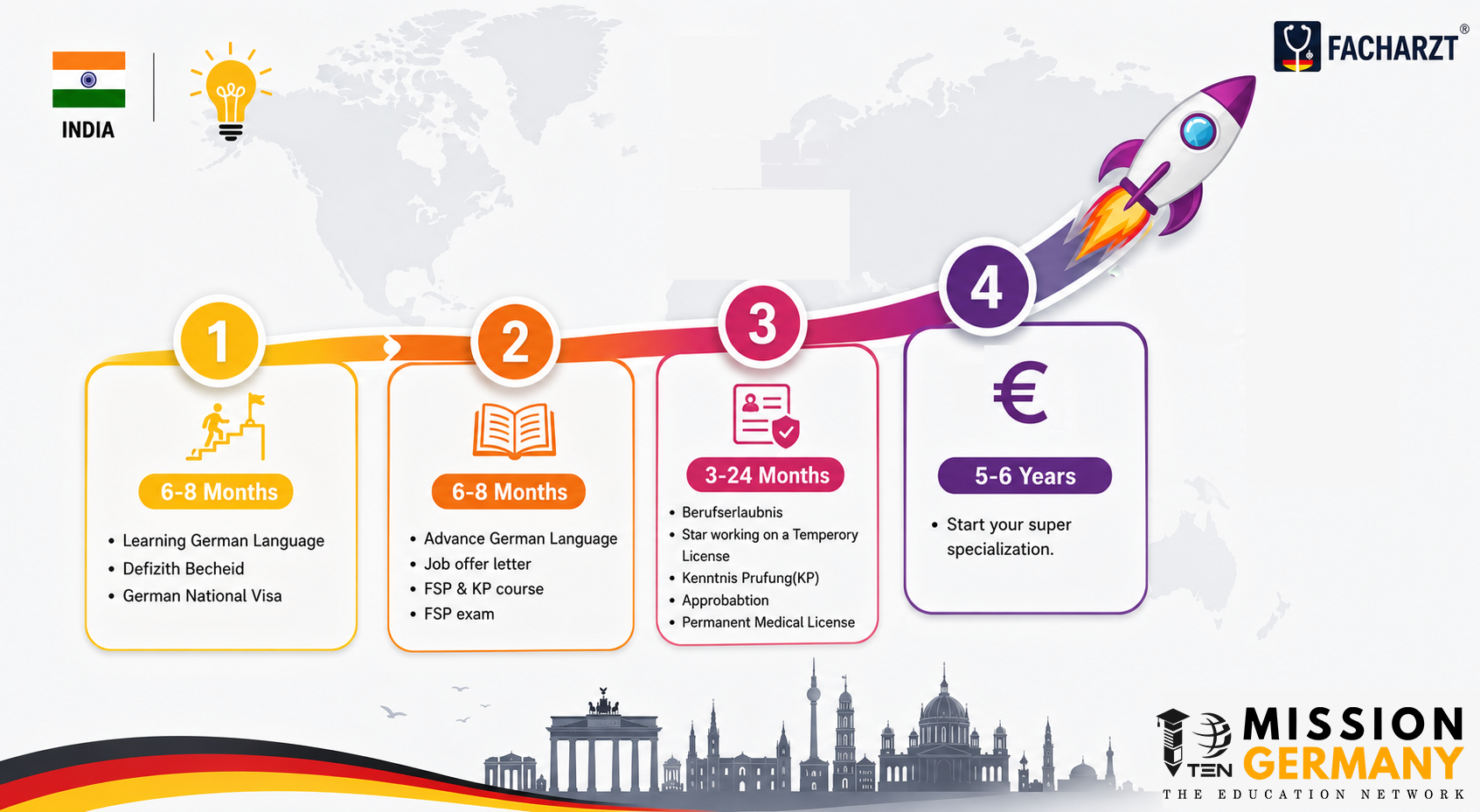
Medical PG in Germany paves the pathway for super specialization that can last five to six years for doctors depending on the specialty.

The good news is that it is a remuneration-based on-the-job training very much like the residency program.

You work as a registered doctor on a Blue Card before starting your Medical PG in Germany giving a doctor the assurance of settlement with a handsome payout.

And all this without any competitive MCQ-based clinical exams and no compromise on your choice of specialization.

You Get What You Want - So What Else Do You Want? So What Else Do You Want?

Achievable Option

Why Medical PG In Germany Is An Achievable Option For Indian Doctors?
Medical PG Germany
STEP

01

01

Medical Specialization Journey

India vs Germany

The prerequisites of becoming a specialist doctor in India is not just expensive but ungratifying with the odds of succeeding are particularly scarce. This is why many opt for PG in Germany after MBBS in India, as the systems in India and Germany are poles apart.

In India, you earn your medical license after completing your medical studies with a compulsory internship. This does not necessarily assure you a seat for medical specialization. You must go through a very competitive MCQ-based exams of NEET-PG followed by NEET-SS and very soon NExT to be a super-specialist in India. Only the top 7 percentile of the aspirants get to become a super-specialist (DM/MCH) in India.

India
  • Competitive Entrance
  • Limited Seats
  • High Competition
Germany
  • Career Opportunity
  • Structured Pathway
  • Residency Training
02

Germany Medical Licensing Pathway

A Direct Route Towards Specialization

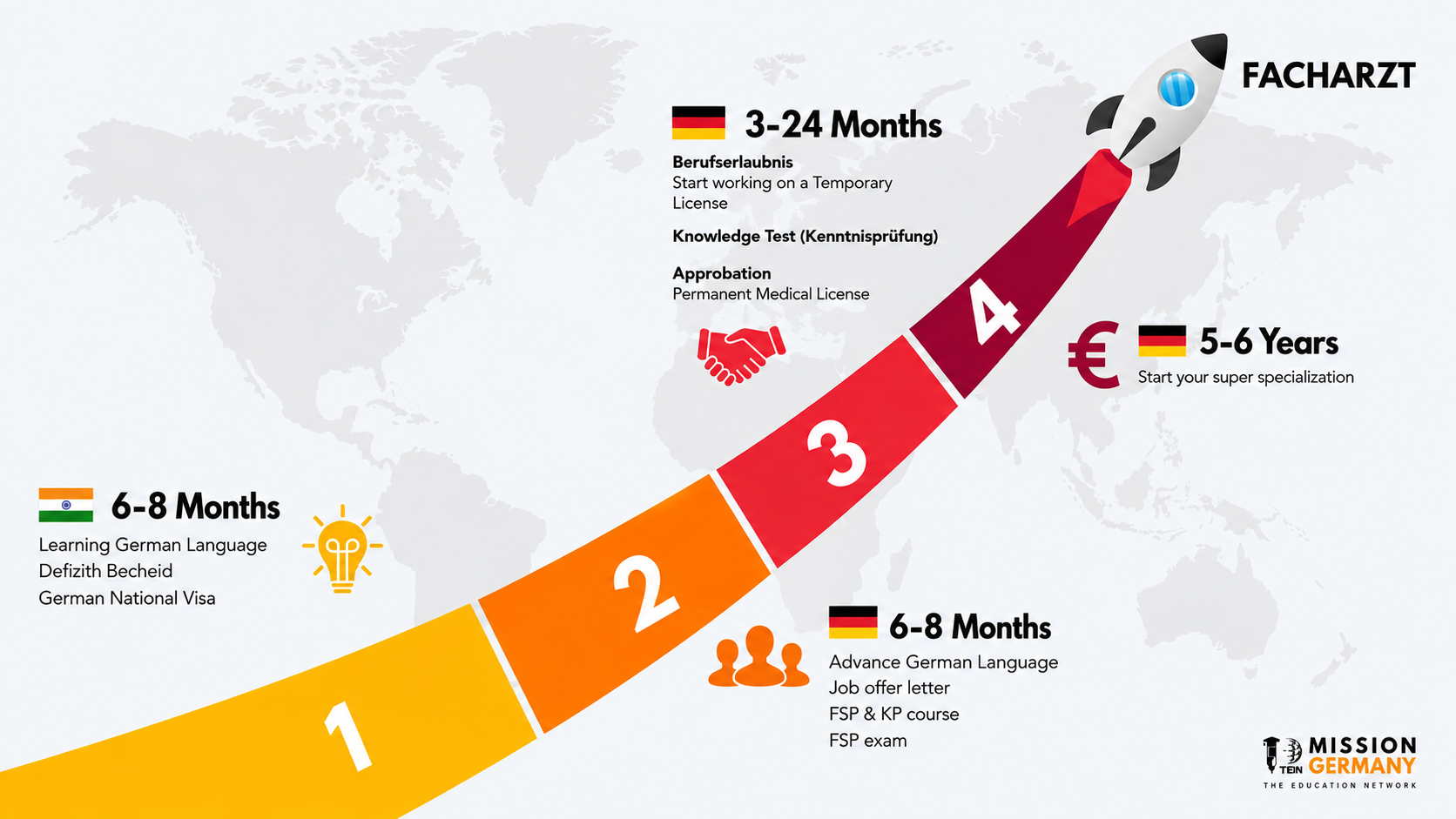
Unlike India, doctors in Germany are entitled to start their specialization with no competitive MCQ-based subject exams like NEET PG or NEET SS in India but can directly start specialization after getting Permanent Medical Licensing called “Approbation”. The only prerequisite is getting a temporary license (Berufserlaubnis).

This is acquired by qualifying the German language and medical German language examinations Fachsprachprüfung – FSP. After passing Fachsprachprüfung – FSP the medic can apply for a knowledge test- Kenntnisprüfung (KP), and after passing Kenntnisprüfung (KP) the medic gets permanent license (Approbation), to begin a fully-paid super specialization training of his choice.

01
German Language
02
FSP
03
KP
04
Approbation
Germany Medical Licensing
STEP

02

German Language Journey
STEP

03

03

German Language & Medical Licensing Journey

From B1 to Approbation

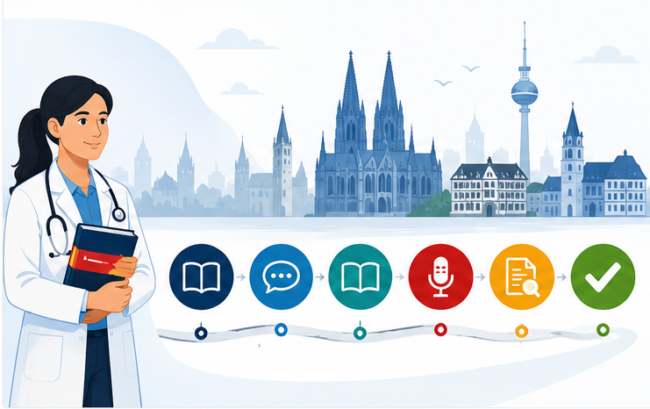
The journey for Medical PG in Germany for Indian Medic can begin with mastering the basic and intermediate level of German Language to the level of B1 in India followed by advanced level of German Language B2-C1 in Germany continued with C1-Medizin Kurs.

Once you clear the verbal qualifying assessment exams of Fachsprachenprüfung (FSP), you begin working on a temporary license with a salary.

After qualifying Kenntnisprüfung (KP), you are granted a permanent medical license called Approbation so that you start your specialization—as a medical practitioner in Germany.

B1
India
B2
Germany
C1
Medizin
FSP
Exam
KP
Exam
Approbation
04

MissionGermany Responsibility

End-to-End Support

MissionGermany, The Education Network thoroughly evaluates your academic records and handles the complete documentation process to support your application for medical licensing in Germany, setting you on a direct path to Medical post-graduation in Germany.

After receiving the necessary approvals (Defizitbescheid/Anhörung) from a specific State Medical Council, you travel to Germany to continue your advanced German language training and prepare for the Medical German language courses, which are vital for Medical PG in Germany after MBBS in India.

Mission Germany Support
STEP

04

Requirements To Start Medical Residency In Germany (Facharzt Weiterbildung)

Indian doctors generally need :

The duration required for different levels of learning:

Mission Germany

  • A18 Weeks
  • A28 Weeks
  • B112 Weeks
  • B2.1, B2.216 Weeks
  • C1.1, C1.216 Weeks

In Germany

  • A18 Weeks
  • A28 Weeks
  • B18 Weeks
  • B2.1, B2.28 Weeks
  • C1.1, C1.28 Weeks

Goethe Institute (India)

  • A112 Weeks
  • A212 Weeks
  • B112 Weeks
  • B2.1, B2.224 Weeks
  • C1.1, C1.224 Weeks

What We Do For You !

Medical PG Germany

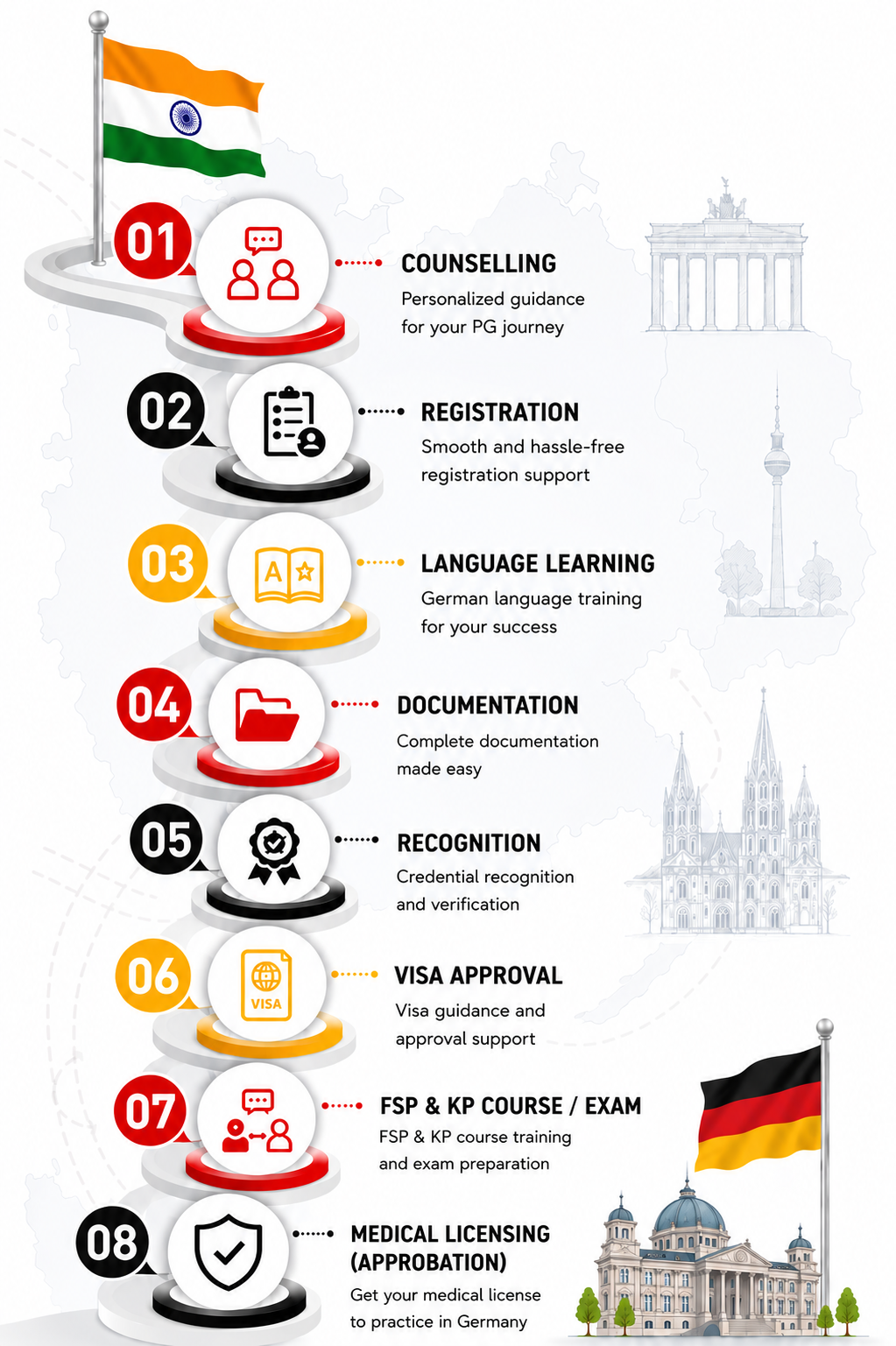
MissionGermany, The Education Network assists you with the entire step-by-step process for Medical PG in Germany after MBBS in India, personalized according to your individual requirements. Right from counselling, registration, language learning, documentation, recognition, visa approval, employment interviews, to medical licensing (Approbation) for continued Medical PG training in Germany.

We also offer a comprehensive range of integrated services to doctors from India with work opportunities in medical setups in Germany. Our support extends beyond Medical PG in Germany after MBBS in India along with guidance for permanent settlement in Germany.

Our qualified team of experts and doctors, both in India and Germany, work relentlessly to ensure a positive outcome in every single case. Our successful experiences give us the confidence to follow a proven repeatable process through which we take result-oriented action to secure employment followed by Medical PG in Germany after MBBS in India. We open the doors for you to make this journey pleasant and smooth through medical post-graduation in Germany.

01
Counselling
02
Registration
03
Language Learning
04
Documentation
05
Recognition
06
Visa Approval
07
Employment Interviews
08
Medical Licensing
(Approbation)
YOUR FUTURE STARTS HERE

SUCCESS COMES TO THOSE WHO TAKE ACTION

🇩🇪 Why Germany?

One Destination. Endless Medical Opportunities.

Discover why Germany has become one of the world's preferred destinations for international doctors.

Germany Healthcare

Why Germany Needs
International Doctors

Germany continues to experience a significant shortage of healthcare professionals. Several factors contribute to this demand, including:

  • An ageing population with increasing healthcare needs.
  • Retirement of a large number of physicians.
  • Unequal distribution of doctors between urban and rural areas.
  • Growing demand for specialized medical services.

As a result, Germany has become one of the most attractive destinations for international doctors seeking postgraduate training and long-term career opportunities.

Residency Benefits

Why Choose Germany
For Residency Training?

Germany offers numerous advantages for international medical graduates:

  • Structured and internationally recognized specialist training.
  • Salaried positions in clinics and hospitals (approx. €4,800 – €5,500/month for beginners, increasing with experience)
  • Zero Tuition Fee as medical specialization is considered a Job.
  • High standards of healthcare and medical education.
  • Excellent work-life balance and quality of life with Five days working/ 40 hrs a week.
  • Extra duties are rewarded with extra payment.
  • Social Security, Health Insurance, and Pension.
  • Blue-card and Permanent Residency in 21 Months.
  • Desired branch with Direct Super-Specialization.
  • Flexibility of changing your choice of specialization during specialization training.

High Demand

Shortage of healthcare professionals.

€4,800 – €5,500

Beginner monthly salary during residency training.

Paid Residency

Medical specialization is considered a Job.

21 Months

Permanent Residency pathway after eligibility.

Germany's Healthcare System Depends on International Talent

0
Foreign doctors currently practicing in Germany
0%
of all physicians in the country are foreign-trained (approx. 14–15%)

The number of foreign physicians working in Germany has increased steadily over the last decade. According to recent statistics from the German Medical Association (Bundesärztekammer), more than 65,000 foreign doctors are currently practicing in Germany, accounting for approximately 14–15% of all physicians in the country.

Doctors from European Union countries represent the largest group, but Germany also attracts thousands of physicians from non-EU countries, including India, Syria, Egypt, Russia, Ukraine and several other nations.

Germany's healthcare system is increasingly dependent on international medical graduates, making it one of the most welcoming destinations for doctors seeking residency and specialist training abroad.

Fachsprachprüfung (FSP)

In English, Fachsprachprüfung translates to “Specialist Language Examination” or “Professional Language Examination.” This is commonly used in Germany to assess doctors with specialized German language proficiency, who obtained their degrees outside the country. It tests whether a medical professional can safely and effectively communicate in a clinical setting. After passing Fachsprachprufung(FSP) the doctor will get temporary license called Beruserlaubnis allowing a doctor to work in the German state in which he applied for his medical license, and then can apply for Kenntnisprufung(KP) Exam.

The exam does not test medical knowledge, only German medical language skills.

Doctor patient communication

Structure of the Fachsprachprüfung (FSP)

The exam has 3 parts, each lasting about 20 minutes :

1. Doctor–Patient Conversation (Anamnese)

You take the medical history from a patient. The patient is usually played by a physician who acts as a patient during the examination.

In this part, you should :

  • Build rapport with the patient.
  • Ask about symptoms, medical history, medications, and allergies.
  • Use patient-friendly language.
  • Show empathy and communicate clearly.

2. Medical Documentation (Arztbrief)

Based on the information obtained during the consultation, you write a medical report.

You should:

  • Document the history in a structured manner.
  • Use appropriate medical terminology.
  • Include the suspected diagnosis and further management.

3. Doctor–Doctor Communication (Arzt-Arzt Gespräch)

You present the case to another doctor using professional medical language.

In this part, you are expected to :

  • Summarize the patient's history and findings.
  • Discuss possible diagnoses and differential diagnoses.
  • Explain further investigations and treatment plans.
  • Answer questions from the examiner.

Difficulty Faced in Fachsprachprüfung (FSP)

  • Doctors who learn German only in their home country often struggle with local accents and hospital communication.
  • Doctors who learn German in Germany usually have a much higher success rate (over 90%).

A specialized medical German course can greatly improve chances of passing.

Who is Eligible to Take a Fachsprachenprüfung (FSP) Exam?

The doctor

  • Who has completed a B2/C1 level of the German language.
  • Have a valid medical degree.
  • Has a job contract / Einstellenzusage / Interest Letter from a clinic / Hospital in that state.

Then he/she can take this exam. This exam is taken by the respective state medical council of Germany where the doctor has the job contract and wants to practice after completion of all formalities.

Why and Where is the Fachsprachprüfung (FSP) Exam Taken?

The Fachsprachprüfung is part of the process to get the Approbation (permanent medical license) in Germany.

A doctor first chooses the German state (Bundesland) where they want to work. Then they submit their documents to the State Medical Council (Ärztekammer) for either:

  • Berufserlaubnis (temporary license), or
  • Approbation (full license)

After checking the documents and approving its recognition, the medical authority will schedule the Fachsprachprüfung (FSP) exam for you.

You cannot freely choose the exam centre. The exam is organized by the medical council (Ärztekammer) of the state where you applied.

Cost of the Fachsprachprüfung (FSP)

The exam fees are different in each German state and usually range between:

Around
€350

e.g. North Rhine Medical Council

Up to
€530

e.g. Bremen Medical Council.........

These fees can change over time, so it is important to always check the latest fee information from the responsible medical authority.

What is a Fachsprachkurs / C1 Medizin Kurs?

Preparation for the specialist language exam for doctors. This course helps in deepening of specialist language skills + medical subject (fundamentals of internal medicine)

Contents

  • Deepening and expansion of vocabulary from the field of human medicine
  • Colloquial expressions for body parts and diseases (in-depth)
  • Deepening of medical communication in the areas of anamnesis, formulation of findings, preparation of doctor's letters, conducting an informational interview
  • Communication with relatives, communication of negative messages
  • Linguistically confidently master conflict situations
  • Extension of the participial constructions
  • Extension of nominalization / verbalization

Goal

  • Be able to understand general and subject-related conversation, even if more complex language is used.
  • Be able to actively participate in specialist discussions in their own specialist area.
  • Can communicate with patients and relatives without any problems.

Berufserlaubnis & Approbation

What is Berufserlaubnis?

Berufserlaubnis is a limited permission (2 Year) to work as a Doctor in Germany while your full license (Approbation) is still under process. This is acquired after passing the Fachsprachprüfung (FSP) exam.

It allows foreign-trained professionals to :

  • Work under supervision
  • Gain clinical experience in Germany
  • ⁠Start working on a temporary license
  • Limited to the issuing state

What is Approbation?

Approbation is the official German license to practice medicine (ärztliche Approbation). This is acquired after passing a knowledge test / Kenntnisprüfung (KP) or qualification assessment (Gleichwertigkeit).

It enables physicians to :

  • Work as a doctor in hospitals, clinics, or private practices.
  • Begin specialist training (Weiterbildung zum Facharzt).
  • Use the professional title "Arzt/Ärztin" in Germany.
  • Practice medicine permanently throughout Germany.

What is Kenntnisprüfung (KP) ?
How is it Conducted ?

The knowledge test is an oral-practical exam with a patient presentation that takes place in one day. It takes at least 60 minutes for each applicant, at most 90 minutes, with a maximum of four applicants. In the examination, the applicant must demonstrate on a case-by-case basis that he/she has the knowledge and skills, also in medical interviewing, that are necessary to practice the medical profession. The examinee must prepare a report on the patient, which contains anamnesis, diagnosis, prognosis, treatment plan and an epicrisis of the case. The report must be signed by a member of the examination board immediately after completion and presented at the examination date. It is subject to the examination and to be included in the evaluation.

The Kenntnisprüfung (KP) typically takes place at a university hospital or an officially recognized teaching hospital in Germany.

The knowledge test is taken as an individual exam before three examiners. In addition to the subjects of surgery, internal medicine and general medicine, the following topics may be the subject of the examination:

Emergency Medicine Clinical Pharmacology/Pharmacotherapy Imaging Procedures Radiation Protection Legal Questions of the Medical Profession

The knowledge test is carried out in German and consists of two parts:

In the field of internal medicine or surgery, this takes place in a hospital. Under the supervision of a member of the examination board, you examine the patient assigned to you and collect the medical history. Finally, you prepare a report on the patient, which is also the subject of the theoretical examination.

This is followed by an oral-practical session, often held in small groups, in which the examiners ask in-depth questions based on clinical cases. The focus lies on internal medicine and surgery, but may also cover areas such as emergency medicine, pharmacology, and infectious diseases. This part usually lasts 60–90 minutes per candidate.

  • A valid personal document (e.g. identity card, passport, residence permit)
  • Coat (white)
  • Stethoscope
  • Reflex hammer
  • Examination lamp
  • Paper and pen (to prepare the report)

Baden-Württemberg€1,100
Bavariaapprox. €520
Berlin€540
Brandenburg€799
Bremen€730
Hamburg€900
Hessen€1,350
Mecklenburg-Vorpommern€640
Lower Saxony€830
Rhineland-Palatinate€1,100
NRW€1,050
Saarland€500
Saxony€850
Saxony-Anhalt€771
Schleswig-Holstein€400
Thuringia€450

Baden-Württemberg€1,100
Bavariaapprox. €520
Berlin€540
Brandenburg€799
Bremen€730
Hamburg€900
Hessen€1,350
Mecklenburg-Vorpommern€640
Lower Saxony€830
Rhineland-Palatinate€1,100
NRW€1,050
Saarland€500
Saxony€850
Saxony-Anhalt€771
Schleswig-Holstein€400
Thuringia€450

Overview of the Fees for the Knowledge Test / Kenntnisprüfung

Baden-Württemberg€1,100
Bavariaapprox. €520
Berlin€540
Brandenburg€799
Bremen€730
Hamburg€900
Hessen€1,350
Mecklenburg-Vorpommern€640
Lower Saxony€830
Rhineland-Palatinate€1,100
NRW€1,050
Saarland€500
Saxony€850
Saxony-Anhalt€771
Schleswig-Holstein€400
Thuringia€450

Kenntnisprüfung (KP) Course ?
What Should You Study ?

For international doctors preparing for the Kenntnisprüfung in Germany, focused preparation is essential. The exam requires strong clinical knowledge, structured clinical reasoning and the ability to communicate medical decisions clearly in German.

Key Areas to Prepare

  • Internal Medicine – Cardiology, Pulmonology, Gastroenterology, Nephrology, Endocrinology and more
  • Surgery – Acute abdomen, trauma, common surgical conditions and postoperative care
  • Emergency Medicine – ABCDE approach, CPR, sepsis, ACS, stroke and shock
  • Pharmacology & Treatment – Common medications, indications, contraindications and side effects
  • Diagnostics – Laboratory interpretation, ECG, X-ray, CT and basic imaging
  • Clinical Cases – Diagnosis, differential diagnosis, investigations and treatment planning
  • Medical German – Medical terminology, patient presentation and communication with patients and colleagues
  • Mock Examinations – Case-based practice and examination-style questions

How to Prepare ?

Focus on clinical reasoning rather than memorization.

A useful approach for every clinical case is:

History → Examination → Differential Diagnosis → Investigations → Diagnosis → Treatment → Follow-up

A structured and case-based preparation can help you approach the Kenntnisprüfung with greater confidence and better clinical understanding.

What If You Fail in Kenntnisprüfung (KP) - Knowledge Test ?

The knowledge test can only be repeated twice. Between the exams, a temporary license can be issued with restrictions for a maximum of 1 year if the examination board has determined that working as a doctor is possible without affecting the health of the patient.

Some Happy Smiles

🇩🇪 Medical PG in Germany

Ready to Start Your Medical Residency Journey in Germany?

Receive personalized guidance from eligibility assessment to Approbation licensing, German language training, hospital placements, visa support, and residency admission.

Free Eligibility Assessment
Language Training Support
Hospital Placement Assistance
End-to-End Approbation Guidance
350+

Doctors Guided

16 States

We work across Germany

Doctor led team

Experienced Medical Professionalse

Medical Approbation Guide

Which German Federal State Is Best for the Medical Approbation?

It’s not about “Berlin or Munich” — it depends on which stage you are in and which challenge is most important for you.

We compare all 16 federal states of Germany for our doctors based on key factors:

Pass/fail rates from the latest medical chamber reports
Total Approbation processing time
FSP and KP Exam Appointment
Rules for issuing Berufserlaubnis (temporary license)
Frequency of Hearings (Anhörung / Defizitbescheid).
Policies for non-EU doctors
State-level funding and support programs
Salaries under TV-Ärzte contracts
Cost of living and rent in each state capital
FSP and Kenntnisprüfung fees
This comparison is based on official sources, including:
  • State Medical Chambers (Ärztekammern)
  • Bundesärztekammer statistics
  • Regional authorities such as BLÄK, LÄK Baden-Württemberg, ZAABY, Bezirksregierung Münster, LSJV, and official chamber activity reports
Medical Illustration

Types of Hospitals in Germany?

There are three types of Hospitals in Germany :

1

Public Hospitals

(Öffentliche Krankenhäuser) are owned and managed by municipalities, cities, or the federal states (Länder).

2

Charitable / Non-Profit Hospitals

(Freigemeinnützige Krankenhäuser) are operated by religious institutions or non-profit organizations, such as the German Red Cross.

3

Private Hospitals

(Privatkrankenhäuser) are owned by commercial companies and function as profit-oriented enterprises.

What Can a Foreign Doctor Do After Approbation in Germany?

Once you receive your Approbation (German Medical License), a world of opportunities opens up. Whether your goal is completing Postgraduate Medical Training (PG), joining Germany's leading hospitals, conducting medical research, or opening your own clinic, Germany offers excellent career growth, high salaries, and long-term professional stability.

Hospitals & Clinics

Work in leading university hospitals, private hospitals and specialty clinics across Germany.

Home Health Care

Provide personalized healthcare services for patients in their homes with flexible work opportunities.

Private Clinic

Build your own medical practice after fulfilling the required regulations and licensing process.

Medical Research

Join world-renowned research institutes and contribute to innovative healthcare discoveries.

Teaching

Become a faculty member in medical universities and mentor future healthcare professionals.

Public Health

Serve government agencies and healthcare departments to improve public health systems.

Health Insurance

Work with insurance organizations in medical evaluation, policy, and healthcare management.

Pharmaceutical Industry

Build a rewarding career in medical technology, clinical trials, or pharmaceutical companies.

Medical Specialist Training Duration in Germany

The following shows the minimum training duration (in months) required for different medical specialties in Germany.
Note: Requirements may vary slightly between different State Medical Associations (Ärztekammern).

Specialist: Anaesthetist60 months

Specialist: Ophthalmologist60 months

General Surgery24 + 48 months Vascular Surgery24 + 48 months Cardiac Surgery24 + 48 months Paediatric Surgery24 + 48 months Orthopaedic & Trauma Surgery24 + 48 months Plastic & Aesthetic Surgery24 + 48 months Thoracic Surgery24 + 48 months Visceral Surgery24 + 48 months

Specialist: Gynaecologist & Obstetrician60 months

Subspecialties:

Reproductive Medicine60 + 36 months Gynaecological Oncology60 + 36 months Perinatal Medicine60 + 36 months

ENT Specialist24 + 36 months

Specialist: Dermatologist60 months

GP/Internist60 months

Internal Medicine Subspecialties:

Angiology72 months Endocrinology & Diabetology72 months Gastroenterology72 months Haematology & Oncology72 months Cardiology72 months Nephrology72 months Pneumology72 months Rheumatology72 months

Paediatrician60 months

Subspecialties:

Paediatric Haematology & Oncology60 + 36 months Paediatric Cardiology60 + 36 months Neonatology60 + 36 months Paediatric Neurology60 + 36 months

Specialist60 months

Specialist72 months

Specialist60 months

Specialist60 months

Psychiatrist60 months Forensic Psychiatry60 + 36 months

Specialist60 months

Radiologist60 months

Subspecialties:

Paediatric Radiology60 + 36 months Neuroradiology60 + 36 months

Specialist60 months

Specialist60 months

Specialist60 months

Important Note : Training durations are based on the German Medical Association (Bundesärztekammer) guidelines. Each federal state (Ärztekammer) may have slightly different requirements.

Indian Medical Specialization vs Medical PG in Germany
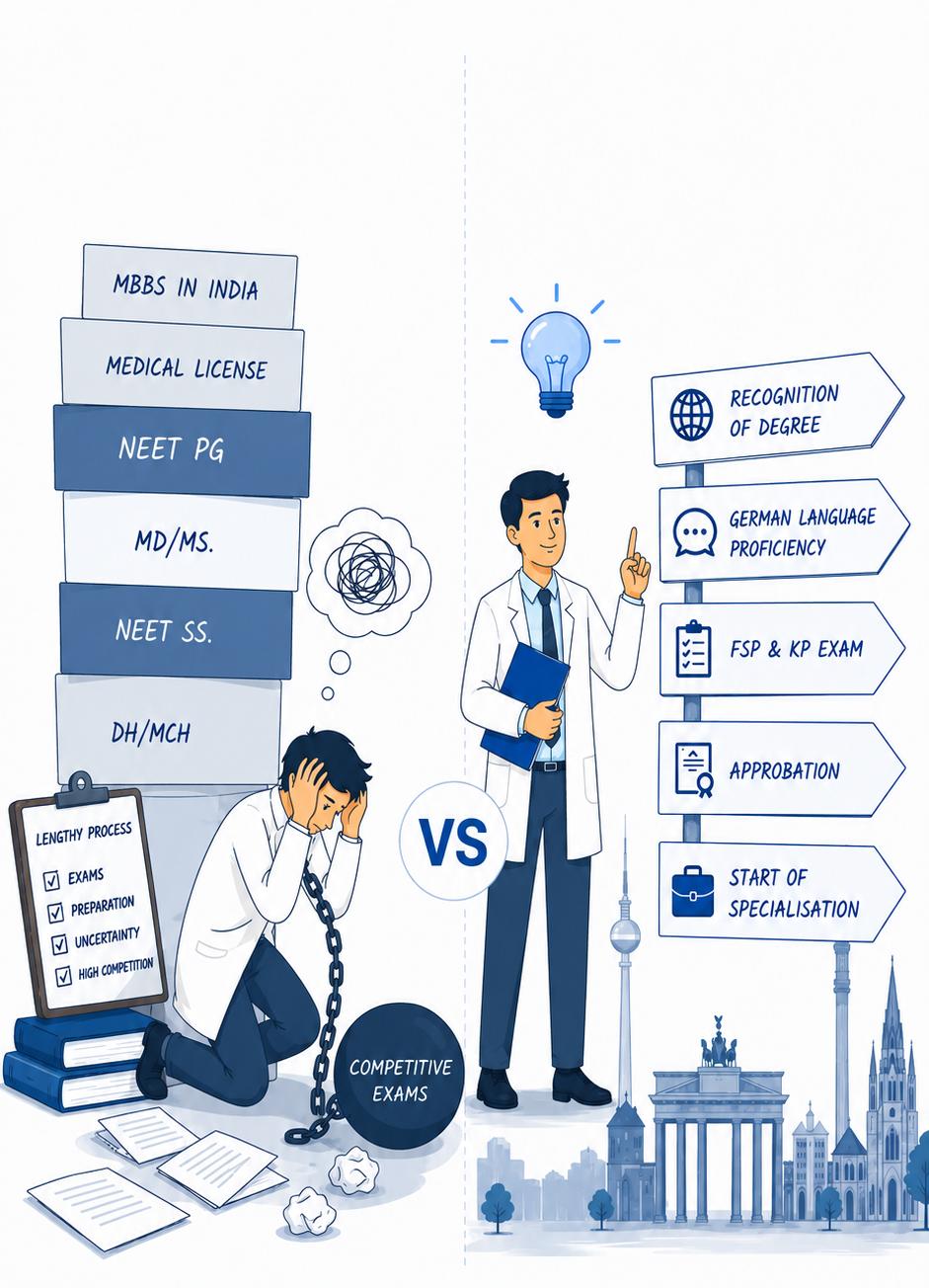
German vs Indian medical PG
Comparison
Indian Medical Specialization
Medical PG in Germany
Exam System
Competitive MCQ based Entrance Exam
German Language Practical Qualifying Exams
Financials
You Pay Fee
You Get Salary
Choice of Stream
Based on Merit
Your Choice
Experience
PG Period Counted as Study time
PG years Counted as Experience
Post PG
NEET - SS
Integrated PG + Super Specialization
Settlement
Struggling on a stipend during PG
Settled job on bluecard before the Start of PG

Is NEET PG/NEXT a Realistic Approach to Reaching Your Goals?

Thousands of talented doctors dedicate years preparing for NEET PG.

Every year, lakhs of young doctors in India dedicate their lives to one dream — to secure a postgraduate medical seat and build a better future for themselves, their families, and their patients.

This year, around 2.42 lakh doctors appeared for NEET PG. Out of them, only about 1.28 lakh qualified. But the heartbreaking reality is that India has only around 27,000 government MD/MS seats.

That means for every 10 doctors who work day and night, sacrifice sleep, mental peace, family time, and years of their youth, only one may get a government PG seat.

This is not just competition — it is an emotional, financial, and mental battle that thousands of doctors and their families are forced to fight every single year.

0%

50 Percentile is the standard cutoff for the NEET PG.

Half of the doctors who appear for the exam are left wondering if they are qualified enough, good enough, or have made the right career choice.

0%

11 Percentile is the specialization cutoff for NEET PG

The remaining 39% who made it to the standard cutoff are still left doubting their career choice.

0%

2 Percentile top Rankers get to select the specialization of their choice.

The remaining 9% who get the top ranks still cannot pick their specialization.

The Reality

Every year 2,42,000 doctors appear for NEET PG. Only around 27,000 Government PG seats are available.

0

Doctors Appeared

0

Govt Seats

Discover Why Germany is the Preferred Choice for Medical PG for Indian Doctors

Compare Germany with the USA and UK to explore affordable education, paid residency, excellent work-life balance, and outstanding career opportunities.

Medical Specialist Training Duration in Germany

The following shows the minimum training duration (in months) required for different medical specialties in Germany.
Note: Requirements may vary slightly between different State Medical Associations (Ärztekammern).

Specialist: Anaesthetist60 months

Specialist: Ophthalmologist60 months

General Surgery24 + 48 months Vascular Surgery24 + 48 months Cardiac Surgery24 + 48 months Paediatric Surgery24 + 48 months Orthopaedic & Trauma Surgery24 + 48 months Plastic & Aesthetic Surgery24 + 48 months Thoracic Surgery24 + 48 months Visceral Surgery24 + 48 months

Specialist: Gynaecologist & Obstetrician60 months

Subspecialties:

Reproductive Medicine60 + 36 months Gynaecological Oncology60 + 36 months Perinatal Medicine60 + 36 months

ENT Specialist24 + 36 months

Specialist: Dermatologist60 months

General Internist / GP60 months

Internal Medicine Subspecialties:

Angiology72 months Endocrinology & Diabetology72 months Gastroenterology72 months Haematology & Oncology72 months Cardiology72 months Nephrology72 months Pneumology72 months Rheumatology72 months

Paediatrician60 months

Subspecialties:

Paediatric Haematology & Oncology60 + 36 months Paediatric Cardiology60 + 36 months Neonatology60 + 36 months Paediatric Neurology60 + 36 months

Specialist60 months

Specialist72 months

Specialist60 months

Specialist60 months

Psychiatrist60 months Forensic Psychiatry60 + 36 months

Specialist60 months

Radiologist60 months

Subspecialties:

Paediatric Radiology60 + 36 months Neuroradiology60 + 36 months

Specialist60 months

Specialist60 months

Specialist60 months

Important Note : Training durations are based on the German Medical Association (Bundesärztekammer) guidelines. Each federal state (Ärztekammer) may have slightly different requirements.

Advantages of Medical PG in Germany After MBBS in India

No Competitive Examination

Germany has qualifying German language exams and a Practical Exam, with a high % of success rate, unlike the USA and UK where competitive exams like USMLE, PLAB, etc. which have to be attempted.

Need for Health Care Practitioners

Doctors are in high demand in Germany, unlike the USA and UK. Owing to its strong economy, Ageing population and growing demand for healthcare professionals.

Guaranteed Settlement

Doctors working in Germany on temporary license (Berufserlaubnis) are eligible for a Blue Card. They can apply for a Permanent Residency in 21 months and a German citizenship in 6 years.

Internationally Recognized Degrees

Medical Specialization Degrees acquired in Germany have international recognition, offering universal prospects for employment and higher studies.

Regulated Residency Programs

Germany ensures an all-inclusive and uniform training experience through its well-structured residency programs, offering well-defined pathways for specialization.

Research Opportunities

Germany boasts of state-of-the-art medical research, ensuring PG students with cutting-edge research projects and alliances with leading industry experts.

To summarize, pursuing a Medical PG in Germany vis-à-vis the USA and UK provides a combination of fine-quality training, lower cost of living, and varied opportunities that make it a convincing choice for international medical graduates.

Make Your Mission Possible with MissionGermany

Your career, your choice — start your Medical PG in Germany journey today.

Get in Touch
Posted on Google Google
abishek reddy gaddam profile picture
abishek reddy gaddam
Google star 1Google star 2Google star 3Google star 4Google star 5Trustindex verifies that the original source of the review is Google.
Had great journey with Mission Germany. Starting from my APS to final Visa, team Mission Germany was very helpful. Initially, As a student I was completely unaware of the process but through the guidance of the team I successfully got my visa. I highly recommend this consultancy. And special mention to Nikhil, Trishna and Durga.
Posted on Google Google
Yeruva Supradeep Reddy profile picture
Yeruva Supradeep Reddy
Google star 1Google star 2Google star 3Google star 4Google star 5Trustindex verifies that the original source of the review is Google.
I applied for my Master's in Germany through Mission Germany, and the entire experience has been very smooth. Nikhil sir is very cooperative and explains every detail of the process thoroughly. As requested, they focused exclusively on top public universities and assisted me seamlessly through every step—from getting the APS certificate to securing the student visa. The team works meticulously, reviewing all documents in detail before final submission, and they are always available to answer queries and provide support.
Posted on Google Google
Rachakonda Eshwarprasad profile picture
Rachakonda Eshwarprasad
Google star 1Google star 2Google star 3Google star 4Google star 5Trustindex verifies that the original source of the review is Google.
We are truly grateful for your support and guidance, sir. Thank you for making the program a successful.
Posted on Google Google
Riddhi J profile picture
Riddhi J
Google star 1Google star 2Google star 3Google star 4Google star 5Trustindex verifies that the original source of the review is Google.
I got admit for my Bachelors in Germany. Nikhil sir and the entire team of MissionGermany helped me in every step. They were very structured in their approch. I highly recommend MissionGermany if any student wants to do Bachelors in Germany in a public university. I am waiting for my VISA. Thanks Nikhil sir for all the support and encouragement.
Posted on Google Google
Rachakonda Hemanthraaj profile picture
Rachakonda Hemanthraaj
Google star 1Google star 2Google star 3Google star 4Google star 5Trustindex verifies that the original source of the review is Google.
I had a very good experience with Mission Germany throughout my Germany process. From the initial consultation to the documentation, visa guidance, and other formalities, their team was very supportive and professional. They explained each step clearly, responded to my questions patiently, and helped me avoid unnecessary confusion during the process. Their guidance was especially helpful in understanding the requirements and completing the process smoothly. I’m very thankful to the entire team for their dedication, timely support, and guidance in helping me move forward with my plans for Germany. I would definitely recommend Consultation MissionGermany to anyone planning to pursue their career as a doctor in Germany. Thank you for all your support and special thanks to Nikhil sir
Posted on Google Google
Veerum Jain profile picture
Veerum Jain
Google star 1Google star 2Google star 3Google star 4Google star 5Trustindex verifies that the original source of the review is Google.
I had an excellent experience at Mission Germany! Nikhil sir, our team lead, provided clear guidance and valuable insights throughout the process. Mahathi ensured smooth coordination, making everything hassle-free. Trishna was incredibly helpful in selecting the right programmes and went the extra mile to assist with the blocked account. I’d highly recommend students or professionals who’re willing to move to Germany in future for their guidance !!
Posted on Google Google
Mirza Rafey Baig profile picture
Mirza Rafey Baig
Google star 1Google star 2Google star 3Google star 4Google star 5Trustindex verifies that the original source of the review is Google.
I had an excellent experience with Mission Germany, HMT Nagar, Hyderabad, especially with Mr. Nikhil Sir. They provide outstanding guidance and support to students who are planning to pursue higher education in Germany, including Master’s programs. Mr. Nikhil Sir is very professional, supportive, and patient throughout the entire process. He explains everything clearly, from choosing the right university and course to understanding the application process and other requirements. His guidance made the whole process much easier and gave me confidence in taking the right steps for my future. I truly appreciate the dedication and personal attention provided by Mr. Nikhil Sir and the entire Mission Germany team. I would highly recommend Mission Germany, HMT Nagar, Hyderabad to any student who is planning to pursue higher education in Germany. Excellent service, genuine guidance, and a very student-friendly approach!
Posted on Google Google
Daksh Jain profile picture
Daksh Jain
Google star 1Google star 2Google star 3Google star 4Google star 5Trustindex verifies that the original source of the review is Google.
A big thank you to Nikhil Sir for his constant guidance and support. With his help, I got admission to a public university in Germany. Really grateful for all the support!
Posted on Google Google
Krupa Jain profile picture
Krupa Jain
Google star 1Google star 2Google star 3Google star 4Google star 5Trustindex verifies that the original source of the review is Google.
As a student I have applied for my bachelors in Germany. Very impressed with the services provided by MissionGermany. Very caring and professional. I recommend them for Bachelors in Germany.
🇩🇪 Why Germany?

One Destination. Endless Medical Opportunities.

Discover why Germany has become one of the world's preferred destinations for international doctors.

Germany Healthcare

Why Germany Needs
International Doctors

Germany continues to experience a significant shortage of healthcare professionals. Several factors contribute to this demand, including:

  • An ageing population with increasing healthcare needs.
  • Retirement of a large number of physicians.
  • Unequal distribution of doctors between urban and rural areas.
  • Growing demand for specialized medical services.

As a result, Germany has become one of the most attractive destinations for international doctors seeking postgraduate training and long-term career opportunities.

Residency Benefits

Why Choose Germany
For Residency Training?

Germany offers numerous advantages for international medical graduates:

  • Structured and internationally recognized specialist training.
  • Salaried positions in clinics and hospitals (approx. €4,800 – €5,500/month for beginners, increasing with experience)
  • Zero Tuition Fee as medical specialization is considered a Job.
  • High standards of healthcare and medical education.
  • Excellent work-life balance and quality of life with Five days working/ 40 hrs a week.
  • Extra duties are rewarded with extra payment.
  • Social Security, Health Insurance, and Pension.
  • Blue-card and Permanent Residency in 21 Months.
  • Desired branch with Direct Super-Specialization.
  • Flexibility of changing your choice of specialization during specialization training.

High Demand

Shortage of healthcare professionals.

€4,800 – €5,500

Beginner monthly salary during residency training.

Paid Program

Medical specialization is considered a Job.

21 Months

Permanent Residency pathway after eligibility.

Germany's Healthcare System Depends on International Talent

0
Foreign doctors currently practicing in Germany
0%
of all physicians in the country are foreign-trained (approx. 14–15%)

The number of foreign physicians working in Germany has increased steadily over the last decade. According to recent statistics from the German Medical Association (Bundesärztekammer), more than 65,000 foreign doctors are currently practicing in Germany, accounting for approximately 14–15% of all physicians in the country.

Doctors from European Union countries represent the largest group, but Germany also attracts thousands of physicians from non-EU countries, including India, Syria, Egypt, Russia, Ukraine and several other nations.

Germany's healthcare system is increasingly dependent on international medical graduates, making it one of the most welcoming destinations for doctors seeking residency and specialist training abroad.

Start Your Medical Career Journey in Germany

Germany welcomes skilled international doctors to join its world-class healthcare system. Discover opportunities, get expert guidance, and take the next step toward working in Germany.

Explore Doctor Opportunities

What Can a Foreign Doctor Do After Approbation in Germany?

Once you receive your Approbation (German Medical License), a world of opportunities opens up. Whether your goal is completing Postgraduate Medical Training (PG), joining Germany's leading hospitals, conducting medical research, or opening your own clinic, Germany offers excellent career growth, high salaries, and long-term professional stability.

Hospitals & Clinics

Work in leading university hospitals, private hospitals and specialty clinics across Germany.

Home Health Care

Provide personalized healthcare services for patients in their homes with flexible work opportunities.

Private Clinic

Build your own medical practice after fulfilling the required regulations and licensing process.

Medical Research

Join world-renowned research institutes and contribute to innovative healthcare discoveries.

Teaching

Become a faculty member in medical universities and mentor future healthcare professionals.

Public Health

Serve government agencies and healthcare departments to improve public health systems.

Health Insurance

Work with insurance organizations in medical evaluation, policy, and healthcare management.

Pharmaceutical Industry

Build a rewarding career in medical technology, clinical trials, or pharmaceutical companies.

What a Foreign Doctor Can Do After Approbation in Germany?

By being a doctor in Germany, you will open doors to a range of professional options like being an employee in hospitals, clinics, healthcare centres, geriatric care services, or home health care services, especially after completing PG in Germany after MBBS in India. You may even set up your private clinic. Other options include medical research, teaching, joining public health departments, health insurance organizations, or the private sector. You can even work as a scientist in medical technology or the pharmaceutical industry. Doctors in Germany have the best remuneration compared to any other profession, making postgraduate medicine Germany highly attractive. Germany remains one of the best countries for doctors seeking high-quality postgraduate training, attractive salaries, and long-term professional opportunities.

Hospitals & Clinics Home Health Care Private Clinic Medical Research Teaching Public Health Depts. Health Insurance Orgs. Pharmaceutical Industry

Types of Hospitals in Germany?

There are three types of Hospitals in Germany :

1

Public Hospitals

(Öffentliche Krankenhäuser) are owned and managed by municipalities, cities, or the federal states (Länder).

2

Charitable / Non-Profit Hospitals

(Freigemeinnützige Krankenhäuser) are operated by religious institutions or non-profit organizations, such as the German Red Cross.

3

Private Hospitals

(Privatkrankenhäuser) are owned by commercial companies and function as profit-oriented enterprises.

Requirements To Start Medical Residency In Germany (Zahnarzt Weiterbildung)

International doctors generally need :

The duration required for different levels of learning:

Mission Germany

  • A18 Weeks
  • A28 Weeks
  • B112 Weeks
  • B2.1, B2.216 Weeks
  • C1.1, C1.216 Weeks

In Germany

  • A18 Weeks
  • A28 Weeks
  • B18 Weeks
  • B2.1, B2.28 Weeks
  • C1.1, C1.28 Weeks

Goethe Institute (India)

  • A112 Weeks
  • A212 Weeks
  • B112 Weeks
  • B2.1, B2.224 Weeks
  • C1.1, C1.224 Weeks

Foreign Doctors In Germany?

The number of foreign physicians working in Germany has increased steadily over the last decade. According to recent statistics from the German Medical Association (Bundesärztekammer), more than 65,000 foreign doctors are currently practicing in Germany, accounting for approximately 14–15% of all physicians in the country.

Doctors from European Union countries represent the largest group, but Germany also attracts thousands of physicians from non-EU countries, including India, Syria, Egypt, Russia, Ukraine and several other nations.

Germany’s healthcare system is increasingly dependent on international medical graduates, making it one of the most welcoming destinations for doctors seeking residency and specialist training abroad.

What A Foreign Doctors Can Do After Approbation In Germany?

By being a doctor in Germany, you will open doors to a range of professional options like being an employee in hospitals, clinics, healthcare centres, geriatric care services, or home health care services, especially after completing PG in Germany after MBBS in India. You may even set up your private clinic. Other options include medical research, teaching, joining public health departments, health insurance organizations, or the private sector. You can even work as a scientist in medical technology or the pharmaceutical industry. Doctors in Germany have the best remuneration compared to any other profession, making postgraduate medicine Germany highly attractive. Germany remains one of the best countries for doctors seeking high-quality postgraduate training, attractive salaries, and long-term professional opportunities.

Types Of Hospitals In Germany?

There are three types of Hospitals in Germany :

  1. Public hospitals (Öffentliche Krankenhäuser) are owned and managed by municipalities, cities, or the federal states (Länder).
  2. Charitable or non-profit hospitals (Freigemeinnützige Krankenhäuser) are operated by religious institutions or non-profit organizations, such as the German Red Cross.
  3. Private hospitals (Privatkrankenhäuser) are owned by commercial companies and function as profit-oriented enterprises.

Requirements To Start Residency In Germany (Facharztweiterbildung)

International doctors generally need:

  1. Recognition of their medical degree.
  2. German language proficiency (usually B2 level).
  3. Passing the medical language examination (Fachsprachprüfung – FSP).
  4. Obtaining the German medical license (Approbation).
  5. Securing a residency position in a hospital or clinic.

Which German Federal State Is Best For The Medical Approbation?

It’s not about “Berlin or Munich” — it depends on which stage you are in and which challenge is most important for you.

We compare all 16 federal states of Germany for our doctors based on key factors such as:

  • Pass/fail rates from the latest medical chamber reports
  • Total Approbation processing time
  • Waiting time for KP exam appointments
  • Rules for issuing Berufserlaubnis (temporary license)
  • Frequency of Hearings (Anhörung / Defizitbescheid).
  • Policies for non-EU doctors
  • State-level funding and support programs
  • Salaries under TV-Ärzte contracts
  • Cost of living and rent in each state capital
This comparison is based on official sources, including:
  • State Medical Chambers (Ärztekammern)
  • Bundesärztekammer statistics
  • Regional authorities such as BLÄK, LÄK Baden-Württemberg, ZAABY, Bezirksregierung Münster, LSJV, and official chamber activity reports

🇩🇪 Medical PG in Germany

Ready to Start Your Medical Residency Journey in Germany?

Receive personalized guidance from eligibility assessment to Approbation licensing, German language training, hospital placements, visa support, and residency admission.

Free Eligibility Assessment
Language Training Support
Hospital Placement Assistance
End-to-End Approbation Guidance
350+

Doctors Guided

16 States

We work across Germany

Doctor led team

Experienced Medical Professionalse

MissionGermany Medical PG

Which German Federal State Is Best for the Medical Approbation?

It’s not about “Berlin or Munich” — it depends on which stage you are in and which challenge is most important for you.

We compare all 16 federal states of Germany for our doctors based on key factors such as:

  • Pass/fail rates from the latest medical chamber reports
  • Total Approbation processing time
  • Waiting time for KP exam appointments
  • Rules for issuing Berufserlaubnis (temporary license)
  • Frequency of Hearings (Anhörung / Defizitbescheid).
  • Policies for non-EU doctors
  • State-level funding and support programs
  • Salaries under TV-Ärzte contracts
  • Cost of living and rent in each state capital
  • FSP and Kenntnisprüfung fees

This comparison is based on official sources, including:

  • State Medical Chambers (Ärztekammern)
  • Bundesärztekammer statistics
  • Regional authorities such as BLÄK, LÄK Baden-Württemberg, ZAABY, Bezirksregierung Münster, LSJV, and official chamber activity reports
Medical Approbation Guide

Which German Federal State Is Best for the Medical Approbation?

It’s not about “Berlin or Munich” — it depends on which stage you are in and which challenge is most important for you.

We compare all 16 federal states of Germany for our doctors based on key factors such as:

Pass/fail rates from the latest medical chamber reports
Total Approbation processing time
Waiting time for KP exam appointments
Rules for issuing Berufserlaubnis (temporary license)
Frequency of Hearings (Anhörung / Defizitbescheid).
Policies for non-EU doctors
State-level funding and support programs
Salaries under TV-Ärzte contracts
Cost of living and rent in each state capital
FSP and Kenntnisprüfung fees
This comparison is based on official sources, including:
  • State Medical Chambers (Ärztekammern)
  • Bundesärztekammer statistics
  • Regional authorities such as BLÄK, LÄK Baden-Württemberg, ZAABY, Bezirksregierung Münster, LSJV, and official chamber activity reports
Medical Illustration

Fachsprachprüfung (FSP)

In English, Fachsprachprüfung translates to "Specialist Language Examination" or "Professional Language Examination". This is commonly used in Germany, to assess doctors with specialized German language proficiency, who obtained their degrees outside the country. It tests whether a medical professional can safely and effectively communicate in a clinical setting.

The exam does not test medical knowledge, only German medical language skills.

Doctor patient communication

Structure of the Fachsprachprüfung (FSP)

The exam has 3 parts, each lasting about 20 minutes :

1. Doctor–Patient Conversation (Anamnese)

You take the medical history from a patient. The patient is usually played by a physician who acts as a patient during the examination.

In this part, you should :

  • Build rapport with the patient.
  • Ask about symptoms, medical history, medications, and allergies.
  • Use patient-friendly language.
  • Show empathy and communicate clearly.

2. Medical Documentation (Arztbrief)

Based on the information obtained during the consultation, you write a medical report.

You should:

  • Document the history in a structured manner.
  • Use appropriate medical terminology.
  • Include the suspected diagnosis and further management.

3. Doctor–Doctor Communication (Arzt-Arzt Gespräch)

You present the case to another doctor using professional medical language.

In this part, you are expected to :

  • Summarize the patient's history and findings.
  • Discuss possible diagnoses and differential diagnoses.
  • Explain further investigations and treatment plans.
  • Answer questions from the examiner.

Difficulty Faced in Fachsprachprüfung (FSP)

  • Doctors who learn German only in their home country often struggle with local accents and hospital communication.
  • Doctors who learn German in Germany usually have a much higher success rate (over 90%).

A specialized medical German course can greatly improve chances of passing.

Who is Eligible to Take a Fachsprachenprüfung (FSP) Exam?

The doctor

  • Who has completed a B2/C1 level of the German language.
  • Have a valid medical degree.
  • Has a job contract / Einstellenzusage / Interest Letter from a clinic / Hospital in that state.

Then he/she can take this exam. This exam is taken by the respective state medical council of Germany where the doctor has the job contract and wants to practice after completion of all formalities.

Why and Where is the Fachsprachprüfung (FSP) Exam Taken?

The Fachsprachprüfung is part of the process to get the Approbation (permanent medical license) in Germany.

A doctor first chooses the German state (Bundesland) where they want to work. Then they submit their documents to the State Medical Council (Ärztekammer) for either:

  • Berufserlaubnis (temporary license), or
  • Approbation (full license)

After checking the documents and approving its recognition, the medical authority will schedule the Fachsprachprüfung (FSP) exam for you.

You cannot freely choose the exam centre. The exam is organized by the medical council (Ärztekammer) of the state where you applied.

Cost of the Fachsprachprüfung (FSP)

The exam fees are different in each German state and usually range between:

Around
€350

e.g. North Rhine Medical Council

Up to
€530

e.g. Bremen Medical Council

These fees can change over time, so it is important to always check the latest fee information from the responsible medical authority.

What is a Fachsprachkurs / C1 Medizin Kurs?

Preparation for the specialist language exam for doctors. This course helps in deepening of specialist language skills + medical subject (fundamentals of internal medicine)

Contents

  • Deepening and expansion of vocabulary from the field of human medicine
  • Colloquial expressions for body parts and diseases (in-depth)
  • Deepening of medical communication in the areas of anamnesis, formulation of findings, preparation of doctor's letters, conducting an informational interview
  • Communication with relatives, communication of negative messages
  • Linguistically confidently master conflict situations
  • Extension of the participial constructions
  • Extension of nominalization / verbalization

Goal

  • Be able to understand general and subject-related conversation, even if more complex language is used.
  • Be able to actively participate in specialist discussions in their own specialist area.
  • Can communicate with patients and relatives without any problems.
🇩🇪 Language Preparation

Begin Your C1 Medizin Language Preparation Today

Build the medical German language skills required to succeed in the Fachsprachenprüfung and confidently start your medical career in Germany.

Berufserlaubnis & Approbation

What is Berufserlaubnis?

Berufserlaubnis is a limited permission (2 Year) to work as a Doctor in Germany while your full license (Approbation) is still under process. This is acquired after passing the Fachsprachprüfung (FSP) exam.

It allows foreign-trained professionals to :

  • Work under supervision
  • Gain clinical experience in Germany
  • Start working earlier without waiting for full recognition

What is Approbation?

Approbation is the official German license to practice medicine (ärztliche Approbation). This is acquired after passing a knowledge test / Kenntnisprüfung (KP) or qualification assessment (Gleichwertigkeit).

It enables physicians to :

  • Work as a doctor in hospitals, clinics, or private practices.
  • Begin specialist training (Weiterbildung zum Facharzt).
  • Use the professional title "Arzt/Ärztin" in Germany.
  • Practice medicine permanently throughout Germany.

What is Kenntnisprüfung (KP) and How is it Conducted?

The Kenntnisprüfung (KP) typically takes place at a university hospital or an officially recognized teaching hospital in Germany.

The knowledge test is taken as an individual exam before three examiners. In addition to the subjects of surgery, internal medicine and general medicine, the following topics may be the subject of the examination:

Emergency Medicine Clinical Pharmacology/Pharmacotherapy Imaging Procedures Radiation Protection Legal Questions of the Medical Profession

The knowledge test is carried out in German and consists of two parts:

In the field of internal medicine or surgery, this takes place in a hospital. Under the supervision of a member of the examination board, you examine the patient assigned to you and collect the medical history. Finally, you prepare a report on the patient, which is also the subject of the theoretical examination.

This is followed by an oral-practical session, often held in small groups, in which the examiners ask in-depth questions based on clinical cases. The focus lies on internal medicine and surgery, but may also cover areas such as emergency medicine, pharmacology, and infectious diseases. This part usually lasts 60–90 minutes per candidate.

Bring to the Practical Exam:

  • A valid personal document (e.g. identity card, passport, residence permit)
  • Coat (white)
  • Stethoscope
  • Reflex hammer
  • Examination lamp
  • Paper and pen (to prepare the report)

What If You Fail in Kenntnisprüfung - Knowledge Test (KP)?

The knowledge test can only be repeated twice. Between the exams, a temporary license can be issued with restrictions for a maximum of 1 year if the examination board has determined that working as a doctor is possible without affecting the health of the patient.

Overview of the Fees for the Knowledge Test / Kenntnisprüfung

Baden-Württemberg€1,100
Bavariaapprox. €520
Berlin€540
Brandenburg€799
Bremen€730
Hamburg€900
Hessen€1,350
Mecklenburg-Vorpommern€640
Lower Saxony€830
Rhineland-Palatinate€1,100
NRW€1,050
Saarland€500
Saxony€850
Saxony-Anhalt€771
Schleswig-Holstein€400
Thuringia€450

Medical Specialist Training Duration in Germany

The following shows the minimum training duration (in months) required for different medical specialties in Germany.
Note: Requirements may vary slightly between different State Medical Associations (Ärztekammern).

Specialist: Anaesthetist60 months

Specialist: Ophthalmologist60 months

General Surgery24 + 48 months Vascular Surgery24 + 48 months Cardiac Surgery24 + 48 months Paediatric Surgery24 + 48 months Orthopaedic & Trauma Surgery24 + 48 months Plastic & Aesthetic Surgery24 + 48 months Thoracic Surgery24 + 48 months Visceral Surgery24 + 48 months

Specialist: Gynaecologist & Obstetrician60 months

Subspecialties:

Reproductive Medicine60 + 36 months Gynaecological Oncology60 + 36 months Perinatal Medicine60 + 36 months

ENT Specialist24 + 36 months

Specialist: Dermatologist60 months

General Internist / GP60 months

Internal Medicine Subspecialties:

Angiology72 months Endocrinology & Diabetology72 months Gastroenterology72 months Haematology & Oncology72 months Cardiology72 months Nephrology72 months Pneumology72 months Rheumatology72 months

Paediatrician60 months

Subspecialties:

Paediatric Haematology & Oncology60 + 36 months Paediatric Cardiology60 + 36 months Neonatology60 + 36 months Paediatric Neurology60 + 36 months

Specialist60 months

Specialist72 months

Specialist60 months

Specialist60 months

Psychiatrist60 months Forensic Psychiatry60 + 36 months

Specialist60 months

Radiologist60 months

Subspecialties:

Paediatric Radiology60 + 36 months Neuroradiology60 + 36 months

Specialist60 months

Specialist60 months

Specialist60 months

Important Note : Training durations are based on the German Medical Association (Bundesärztekammer) guidelines. Each federal state (Ärztekammer) may have slightly different requirements.

Advantages of Medical PG in Germany After MBBS in India

No Competitive Examination

Germany has qualifying German language exams and a Practical Exam, with a high % of success rate, unlike the USA and UK where competitive exams like USMLE, PLAB, etc. which have to be attempted.

Need for Health Care Practitioners

Doctors are in high demand in Germany, unlike the USA and UK. Owing to its strong economy and growing demand for healthcare professionals.

Guaranteed Settlement

Doctors working in Germany on temporary license (Berufserlaubnis) are eligible for a Blue Card. They can apply for a Permanent Residency in 21 months and a German citizenship in 6 years.

Internationally Recognized Degrees

Medical Specialization Degrees acquired in Germany have international recognition, offering universal prospects for employment and higher studies.

Regulated Residency Programs

Germany ensures an all-inclusive and uniform training experience through its well-structured residency programs, offering well-defined pathways for specialization.

Research Opportunities

Germany boasts of state-of-the-art medical research, ensuring PG students with cutting-edge research projects and alliances with leading industry experts.

To summarize, pursuing a Medical PG in Germany vis-à-vis the USA and UK provides a combination of fine-quality training, lower cost of living, and varied opportunities that make it a convincing choice for international medical graduates.

Make Your Mission Possible with MissionGermany

Your career, your choice — start your Medical PG in Germany journey today.

Get in Touch
Book Consultancy